
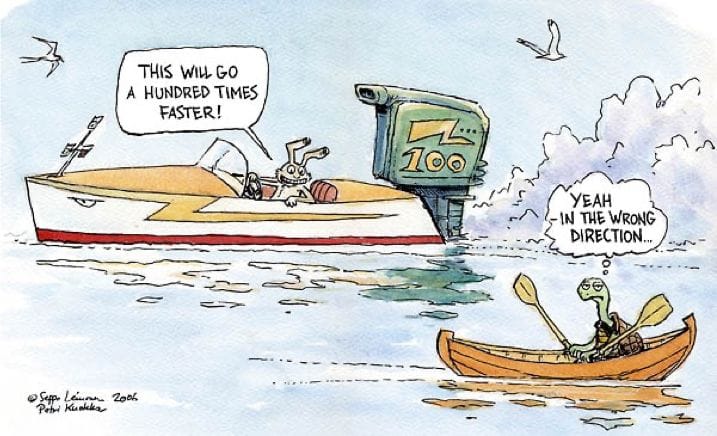
You’ve read the productivity books. Downloaded the latest task management apps. Implemented morning routines and time-blocking systems. Yet despite all these tools and techniques, you still feel overwhelmed, reactive, and unable to make meaningful progress on what truly matters.
Your days fill with activity—emails answered, meetings attended, tasks completed—but you end each week wondering what you actually accomplished. The harder you work, the further behind you seem to fall. The more tools you adopt, the more complex your systems become.
This isn’t a failure of discipline or tool selection. You’re experiencing the fundamental limitation of conventional productivity thinking, which treats productivity as a task completion problem rather than what it actually is: a creativity access problem.
The transformation from overwhelmed and reactive to focused and impactful doesn’t come from doing more things faster. It comes from creating the conditions that allow your innate creativity and talents to emerge and drive meaningful growth.
Corporate-to-Entrepreneur Productivity Shock
The transition from corporate employment to entrepreneurship reveals the inadequacy of conventional productivity approaches with brutal clarity.
Structured Environment Advantage
Corporate environments provide substantial productivity infrastructure that remains invisible until you leave. Clear role definitions specify your responsibilities. Established processes guide how work gets done. Team structures distribute tasks across multiple people. Regular meetings create coordination rhythms.
This infrastructure handles much of the cognitive overhead that entrepreneurs must manage independently. You can focus on execution within defined parameters rather than simultaneously defining strategy, creating processes, coordinating stakeholders, and executing tasks.
Entrepreneurial Overwhelm
Stepping into entrepreneurship removes this infrastructure entirely. Suddenly you’re responsible for everything—strategy and execution, client delivery and business development, financial management and marketing, operations and innovation.
The sheer volume of work that arrives daily can be paralysing. Despite being capable of handling substantial corporate workloads, many new entrepreneurs find themselves doing less and accomplishing even less. The overwhelm leads to anxiety and procrastination—the exact opposite of productivity.
This pattern isn’t about capability or work ethic. It reflects the inadequacy of productivity systems designed for structured environments when applied to the unstructured complexity of entrepreneurship.
Organisation-First Approach
Discovering frameworks like David Allen’s “Getting Things Done” provides initial relief by addressing the chaos of unorganised commitments.
Capture and Organisation Benefits
GTD’s emphasis on capturing all commitments in trusted external systems frees mental bandwidth previously consumed by trying to remember everything. The clarification and organisation processes transform vague anxieties into concrete next actions.
This organisation creates immediate improvements. The constant background worry about forgotten tasks diminishes. The paralysis of looking at overwhelming, mixed-context lists reduces as tasks get organised by context and project.
Efficiency Enhancement
Frameworks like Tim Ferriss’s “The 4-Hour Work Week” add efficiency principles—elimination of unnecessary work, automation of routine tasks, delegation of activities that don’t require your unique capabilities.
These approaches create space in your schedule and reduce the volume of work requiring personal attention. You’re no longer drowning in operational tasks, leaving capacity for more strategic activities.
Persistent Gap
Yet even with excellent organisation and efficiency, something crucial remains missing. Your business isn’t seeing the growth you know is possible despite working harder than ever. You’re organised and efficient but not effective at driving meaningful results.
The missing element isn’t about organisation or efficiency—it’s about direction and prioritisation.
Prioritisation Paralysis
The medieval fable of Buridan’s donkey illustrates a fundamental productivity challenge. The donkey, standing equidistant between two equally appealing bales of hay, cannot decide which to approach first. Unable to prioritise, it starves to death despite abundant resources.
Modern Paralysis Pattern
Ambitious professionals face similar paralysis when confronted with multiple important priorities. The client project needs attention. The business development activity could generate future revenue. The team member requires coaching. The strategic planning can’t be postponed indefinitely.
Each priority appears legitimate and important. Without clear frameworks for evaluation, you oscillate between options or freeze entirely, making minimal progress on any front.
Busy-But-Ineffective Trap
This paralysis often manifests as busy ineffectiveness. You work constantly on whatever feels most urgent or creates the most immediate anxiety. Tasks get completed, meetings happen, emails get answered. Yet the strategic work that would actually move your business forward remains perpetually postponed.
The activity creates the illusion of productivity whilst actual progress stalls. You’re organised and efficient at doing the wrong things.
Direction-First Principle
Real productivity transformation requires inverting the conventional approach. Instead of trying to do everything faster, focus on doing the right things well.
Identifying What Moves the Needle
True productivity starts with clarity about which activities create disproportionate value. What work actually advances your most important objectives? Which tasks generate results versus merely creating activity?
This identification requires honest assessment of impact versus effort. Many activities feel important because they’re urgent or visible, yet they contribute minimally to meaningful progress. Other activities feel optional yet create compound benefits over time.
The 80/20 principle applies here. Roughly 20% of your activities generate 80% of your results. Identifying that vital 20% becomes the foundation for genuine productivity.
Creating Maintenance Systems
Once you’ve identified high-impact work, the next step involves creating systems to handle everything else adequately without consuming your personal time and attention.
Maintenance tasks—operational necessities that keep things running but don’t create growth—need systematic handling through delegation, automation, or batching. These activities can’t be eliminated entirely, but they shouldn’t consume capacity needed for high-impact work.
The goal isn’t perfection in maintenance activities. It’s adequacy achieved efficiently, freeing resources for work that actually matters.
Protecting Creative Capacity
With maintenance tasks systematised and priorities clarified, you can protect time and mental bandwidth for accessing your creativity and unique talents.
This isn’t about scheduling “creative time” on your calendar. It’s about creating the conditions—mental clarity, adequate energy, freedom from constant interruption—that allow your best thinking to emerge.
Creativity and insight don’t respond to forced effort. They emerge when your mind has space to make connections, see patterns, and generate novel solutions. Productivity systems should create this space rather than filling every moment with structured activity.
The Four Elements of True Productivity
Genuine productivity transformation requires integration across four dimensions rather than optimisation of any single element.
Element 1: Strategic Clarity
Understanding what deserves your attention—your unique value creation opportunities, the activities that drive disproportionate results, the priorities that align with your long-term objectives.
This clarity comes from regular reflection and strategic thinking, not just tactical planning. It requires stepping back from daily operations to evaluate direction and impact.
Element 2: Systematic Organisation
Capturing, processing, and organising all commitments in trusted external systems that free your mind from the overhead of remembering and tracking everything.
This organisation must be comprehensive across all life domains—work, family, health, relationships, personal development. Partial organisation leaves mental overhead that consumes bandwidth.
Element 3: Efficient Execution
Handling necessary maintenance work through delegation, automation, batching, and elimination. Creating workflows that accomplish required tasks with minimal personal time and energy investment.
Efficiency matters, but only after clarity and organisation establish what deserves efficient execution versus elimination entirely.
Element 4: Creative Access
Protecting the mental bandwidth, energy, and uninterrupted time necessary for your best thinking, problem-solving, and creative work to emerge.
This element often receives the least attention yet creates the most value. Your unique insights, strategic thinking, and creative solutions generate disproportionate impact compared to efficient task execution.
Meaningful Growth Connection
True productivity isn’t ultimately about personal efficiency—it’s about creating meaningful impact in your work and life.
Beyond Personal Achievement
Productivity systems should enable you to apply your unique abilities to improving your life and others’ lives. The goal isn’t just personal accomplishment but contribution that creates value for clients, teams, family, and community.
This broader purpose provides both motivation and direction. When productivity serves meaningful objectives beyond task completion, the work itself becomes more engaging and sustainable.
Creativity-Impact Link
Your most valuable contributions typically emerge from accessing your creativity and unique talents rather than from efficient execution of routine tasks. The strategic insight that transforms your business approach. The innovative solution that solves a persistent client problem. The relationship-building that creates new opportunities.
These high-impact contributions require the mental space and energy that conventional productivity approaches often eliminate in pursuit of maximum efficiency.
Your Productivity Evolution
The journey from conventional productivity thinking to true productivity requires conscious evolution through several stages.
Many professionals start with chaos—disorganised commitments, reactive work patterns, constant overwhelm. Organisation frameworks like GTD provide the first transformation, creating external systems that free mental bandwidth.
Efficiency approaches add the second layer, eliminating unnecessary work and systematising routine tasks. This creates space and capacity previously consumed by operational overhead.
Yet even organised efficiency leaves a gap. The final evolution involves prioritisation clarity and creative access—understanding what truly matters and protecting the conditions necessary for your best work to emerge.
This evolution isn’t linear. You’ll cycle through these elements repeatedly as circumstances change and new challenges emerge. The key is recognising which dimension needs attention at any given time rather than assuming one approach solves all productivity challenges.
Building Your Integrated System
True productivity requires an integrated approach that addresses all four elements—strategic clarity, systematic organisation, efficient execution, and creative access—rather than optimising any single dimension.
Your system should help you identify what truly moves the needle in your work and life. It should provide trusted external organisation that frees mental bandwidth. It should enable efficient handling of maintenance tasks through delegation and automation. And crucially, it should protect the time and energy necessary for accessing your creativity and unique talents.
This integration creates compound benefits. Strategic clarity guides what you organise and how you execute efficiently. Systematic organisation frees bandwidth for strategic thinking. Efficient execution creates space for creative work. Creative access generates insights that improve your strategy, organisation, and execution.
Ready to build a productivity system that goes beyond tools and tasks to actually unlock your creative potential and drive meaningful growth? The Nerd Productivity System provides the complete framework for integrating strategic clarity, systematic organisation, efficient execution, and creative access into a unified approach that enables your best work without the overwhelm and anxiety that conventional productivity thinking creates.