
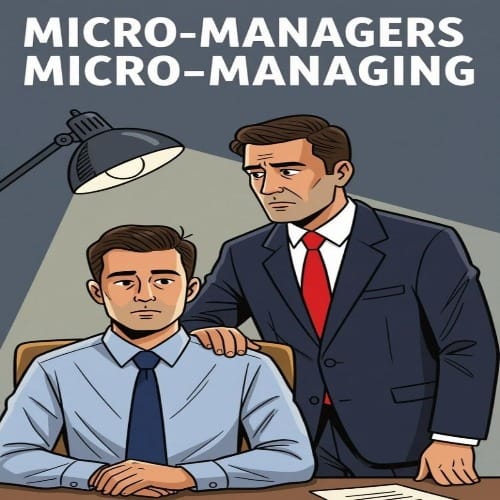
“My employees don’t take any ownership. I have to follow up on everything.” The frustrated executive’s complaint echoes across conference rooms and networking events worldwide. His friend’s half-joking response cuts to what many assume is the core issue: “You hire the cheapest talent you can find, pay them like shit, then expect miracles!”
This exchange reflects the conventional wisdom about team performance problems. When teams underperform, leaders typically blame talent quality, compensation levels, or employee motivation. They respond with expensive solutions: higher salaries, better benefits, team-building retreats, training programs, or performance improvement plans.
Yet these solutions often fail to address the real issue. Talented, well-compensated teams still struggle with ownership and initiative. The problem isn’t what most leaders think it is.
The real culprit is something far more fundamental and much easier to fix: context.
Hidden Context Crisis
When teams underperform, it’s primarily because they don’t share the same context their leaders possess. This context gap creates a cascade of problems that manifest as apparent ownership issues, but the symptoms mask the underlying cause.
Leader’s Context Advantage
As a leader, you operate with comprehensive context about organizational strategy, market pressures, competitive dynamics, and long-term vision. You understand how individual projects connect to broader objectives. You see the relationships between different initiatives and their relative importance.
This context enables you to make quick decisions, prioritize effectively, and take initiative on emerging issues. Your actions feel obvious because you understand the bigger picture.
Team’s Context Deficit
Your team members, however skilled and motivated, operate with fragments of this broader context. They receive task assignments without understanding strategic rationale. They work on projects without seeing how their efforts connect to organizational success. They make decisions based on incomplete information about priorities and constraints.
Without this context, even talented individuals become reactive order-takers rather than proactive problem-solvers. They wait for direction because they lack the information necessary to take meaningful initiative.
Micromanagement Trap
This context gap forces leaders into micromanagement patterns. When team members can’t see the bigger picture, they can’t make autonomous decisions that align with organizational objectives. Leaders compensate by providing detailed instructions, frequent check-ins, and constant course corrections.
Micromanagement then becomes a self-reinforcing cycle. Team members, accustomed to detailed direction, stop exercising judgment and initiative. Leaders, seeing this dependency, provide even more detailed oversight. The context gap widens as leaders hoard information rather than sharing it.
Motivation Paradox
Lack of context can be more demotivating than poor financial compensation. Money motivates, but meaning motivates more powerfully and sustainably.
Psychology of Meaningful Work
Research consistently shows that people are most motivated when they understand how their work contributes to something larger than themselves. This connection between individual effort and meaningful outcomes creates intrinsic motivation that external rewards cannot match.
When team members understand why their work matters, how it connects to organizational success, and what impact it creates for customers or stakeholders, they invest emotional energy beyond what compensation alone can generate.
Demotivation of Disconnection
Conversely, working without context creates existential frustration. Team members feel like cogs in a machine, executing tasks without understanding their purpose or impact. This disconnection erodes motivation more effectively than modest compensation.
Talented professionals, in particular, find contextless work deeply unsatisfying. They want to apply their capabilities to meaningful challenges, not just complete assigned tasks efficiently.
Beyond Financial Incentives
While competitive compensation remains important for attraction and retention, it doesn’t drive day-to-day performance as powerfully as context and meaning. Teams that understand their purpose often outperform better-compensated teams that lack this understanding.
Financial incentives can even backfire when applied to contextless work. Bonuses for achieving goals that seem arbitrary or disconnected from meaningful outcomes can feel manipulative rather than motivating.
Three-Step Context Framework
Providing context doesn’t require complex systems or extensive time investment. A simple three-step framework can transform team understanding and performance:
Step 1: Clarify the WHY
For every goal, metric, project, or task, explain the underlying purpose that connects this work to larger organizational objectives.
Beyond Surface Explanations Don’t just state that something is important—explain why it’s important. Connect the dots between the specific work and broader strategic goals. Help team members understand the consequences of success and failure.
Stakeholder Impact Explain who benefits from successful completion and how. Whether it’s customers, other departments, or the organization as a whole, help team members see the human impact of their efforts.
Strategic Context Share how this work fits into the competitive landscape, market dynamics, or organizational challenges. This broader context helps team members understand urgency and priority.
Step 2: Define the VISION
Create a clear, concrete picture of what success looks like—not abstract mission statements, but specific descriptions of the desired end state.
Concrete Outcomes Describe what the world looks like once the goal is achieved or project is complete. What changes for customers, processes, or organizational capabilities?
Success Metrics Define measurable indicators that demonstrate achievement. Help team members understand not just what to do, but how to recognize when they’ve succeeded.
Quality Standards Clarify what “good” looks like in terms of deliverables, processes, and outcomes. This reduces ambiguity and enables autonomous decision-making.
Step 3: BRAINSTORM Solutions Together
Engage the team in collaborative problem-solving to bridge the gap between current state and desired vision.
Democratic Idea Generation Create space for all team members to contribute ideas, regardless of hierarchy or role. Often, those closest to the work have the best insights about practical solutions.
Non-Judgmental Environment Encourage creative thinking by suspending evaluation during initial brainstorming. All ideas have potential value, and premature judgment stifles innovation.
Collective Ownership When team members participate in solution design, they develop emotional investment in successful execution. They become co-creators rather than passive implementers.
20-40 Minute Transformation
This context-sharing process can be completed in a single focused session lasting 20-40 minutes. The time investment is minimal, but the impact on team energy and engagement is dramatic.
Immediate Energy Shift
Teams that receive comprehensive context often experience immediate energy increases. Work that felt meaningless suddenly connects to important outcomes. Tasks that seemed arbitrary reveal their strategic importance.
This energy shift is more powerful than financial incentives because it addresses intrinsic motivation rather than just external rewards.
Sustained Engagement
Unlike temporary motivational boosts from bonuses or recognition, context-driven engagement sustains over time. Team members carry the understanding forward, applying it to new challenges and opportunities.
Reduced Management Overhead
When teams understand context, they require less oversight and direction. They can make autonomous decisions that align with organizational objectives, reducing the management burden on leaders.
Financial Reward Enhancement
While context is more powerful than financial incentives alone, the combination can be particularly effective when applied correctly.
Foundation First
Financial rewards work best when built on a foundation of shared context. Team members who understand why goals matter are more motivated by rewards for achieving them.
Believable Stretch Goals
Financial incentives enhance performance when goals are challenging but achievable. Context helps team members assess whether targets are realistic given available resources and constraints.
Avoiding Counterproductive Incentives
When goals seem impossible or arbitrary, financial rewards can actually demotivate by highlighting the disconnect between effort and realistic outcomes. Context helps ensure that incentivized goals feel meaningful and achievable.
Accountability Accelerator
Adding regular accountability rhythms amplifies the impact of shared context:
Weekly Standup Structure
Short weekly meetings that revisit shared context, celebrate progress, resolve bottlenecks, and plan immediate next steps maintain momentum and alignment.
Context Reinforcement Regular meetings provide opportunities to reinforce the connection between daily work and larger objectives, especially as priorities evolve.
Progress Celebration Acknowledging advancement toward goals maintains motivation and demonstrates that efforts are creating meaningful results.
Bottleneck Resolution Identifying and addressing obstacles quickly prevents frustration and maintains forward momentum.
Realistic Planning Breaking work into weekly increments makes progress feel achievable and maintains focus on immediate priorities.
Compound Effect
The combination of shared context plus regular accountability creates compound benefits that exceed the sum of individual components. Teams develop rhythm, confidence, and collective problem-solving capabilities that persist beyond individual projects.
Real-World Transformation Examples
Consider how context transforms common workplace scenarios:
Sales Team Challenge
Without Context: “Increase quarterly revenue by 20%” Team members see this as an arbitrary target imposed by management. They work harder but without strategic focus, often competing with each other and pursuing short-term deals that compromise long-term relationships.
With Context: “Our market share has declined 5% as competitors launch similar features. We need 20% revenue growth this quarter to fund the product development that keeps us competitive. Success means signing 15 new enterprise clients who value our unique integration capabilities.” Team members understand the competitive urgency and focus on high-value prospects who appreciate the company’s differentiators.
Process Improvement Project
Without Context: “Reduce customer onboarding time by 30%” Team members see this as efficiency for its own sake. They focus on speed without considering customer experience or downstream impacts.
With Context: “Customer satisfaction drops 25% during our 6-week onboarding process, and competitors complete onboarding in 4 weeks. We need to reduce our timeline by 30% while maintaining quality to prevent customer churn and competitive disadvantage.” Team members focus on improvements that enhance both speed and experience, considering the full customer journey.
Technology Implementation
Without Context: “Implement the new CRM system by year-end” Team members see this as a disruptive technology change imposed by leadership styles. Resistance and minimal compliance are common.
With Context: “Our current CRM can’t scale with our growth, and we’re losing deals due to poor lead tracking. The new system will enable the sales team to manage 50% more prospects while improving customer relationships. Success means seamless data migration and full team adoption by year-end.” Team members understand the business necessity and focus on implementation approaches that maximize adoption and minimize disruption.
Building a Context Culture
Transforming team performance requires embedding context-sharing into organizational culture:
Leadership Modeling
Leaders must consistently demonstrate context-sharing in their communications. This signals the importance of comprehensive better briefings and creates expectations for similar behavior throughout the organization.
System Integration
Build context-sharing into project initiation processes, goal-setting frameworks, and performance management systems. Make it a standard part of how work gets assigned and managed.
Training and Development
Invest in communication skills training that emphasizes context-setting and strategic thinking. Help managers understand how to connect tactical work to strategic objectives.
Feedback Mechanisms
Create safe channels for team members to request additional context when they feel disconnected from larger objectives. Encourage questions that help people understand the bigger picture.
Leadership Mirror Moment
If you find yourself micromanaging, take a long, hard look in the mirror. The problem likely isn’t your team’s capability or motivation—it’s the context gap you’ve inadvertently created.
Micromanagement is a symptom, not a management style. It indicates that team members lack the information necessary to make autonomous decisions that align with your objectives.
The solution isn’t tighter control—it’s better context-sharing that enables team members to exercise judgment and initiative effectively.
Beyond Individual Teams
The context framework scales beyond individual team management to organizational transformation:
Cross-Functional Alignment
When multiple departments understand shared context, they coordinate more effectively without extensive oversight. Marketing and sales align naturally when they understand common objectives and constraints.
Strategic Execution
Organization-wide context-sharing ensures that strategic initiatives get executed consistently across all levels and departments.
Innovation and Initiative
Teams with comprehensive context identify opportunities and solve problems proactively rather than waiting for direction from leadership.
Ownership Transformation
When you provide comprehensive context consistently, apparent ownership problems often resolve themselves. Team members who understand the bigger picture naturally take initiative, make better decisions, and invest emotional energy in successful outcomes.
The transformation isn’t about finding better people or paying more money—it’s about treating your existing team as the intelligent, capable professionals they are by giving them the information they need to excel.
Your team’s performance problems aren’t about talent or compensation. They’re about context. And context is entirely within your control to provide.
Ready to discover what’s really holding your team back from peak performance? Take the Team Productivity Assessment to identify specific context gaps and get a customized plan for transforming your team’s ownership, initiative, and results through better communication and shared understanding.