
You’ve built a capture system. You have one inbox for everything — a single place where tasks, ideas, and commitments land. And somehow your head is still full.
The problem usually isn’t the capture system itself. It’s what’s going into it. Every notification, every message thread, every “quick question” that isn’t really quick — all of it arrives with the same urgency, and all of it ends up competing for the same mental space.
The second habit in the Nerd Productivity System exists to solve this. It’s not about capturing less. It’s about building a filter before your capture system so that what reaches you is signal, not noise.
What blocking and filtering noise actually means
Most productivity advice focuses on what to do with information once it reaches you. The NP System takes a different approach: decide in advance which sources deserve your attention, and set up rules so the rest doesn’t interrupt you in real time.
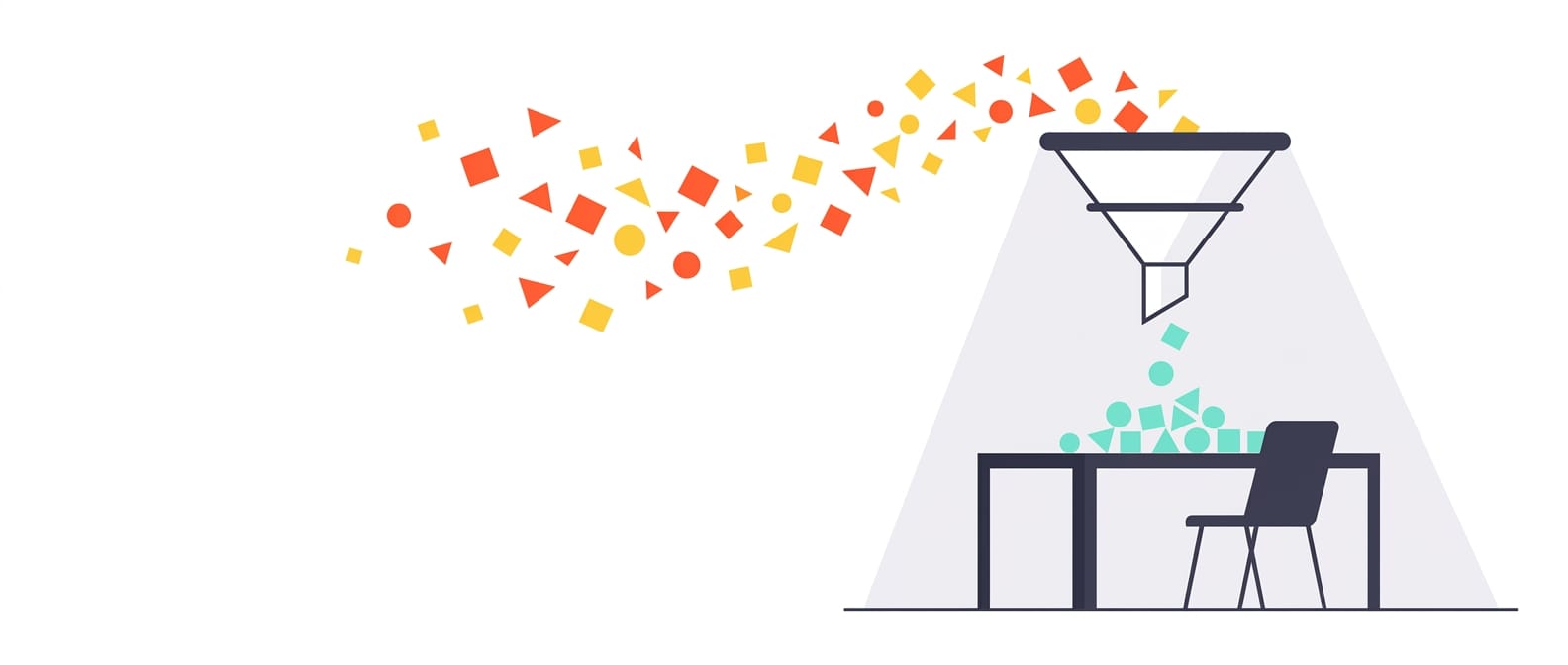
This is the gate before your universal capture system. Every item that enters your capture inbox is something you’ve decided is worth tracking. Noise never makes it that far — not because you’ve ignored it, but because you’ve routed it to a time and context where you can handle it deliberately.
The distinction matters. Filtering noise isn’t the same as being unresponsive. It means being responsive on your terms, not on the terms of whoever sent the last notification.
Why most business owners skip this habit
Reactivity feels productive. Responding to messages as they arrive feels like staying on top of things. Every reply is a small completion, and small completions feel like momentum.
But there’s a real cost. Research on attention and interruption is consistent: it takes around 20 minutes to return to a focused state after a context switch. If you’re checking messages every 10 minutes, you’re never actually working deeply — you’re cycling between shallow engagement and partial recovery.
The other reason owners skip this habit is the belief that their situation is different. Their clients expect fast responses. Their team needs access. Their industry moves quickly. Some of this is true. Most of it is a story that justifies a reactive pattern because the alternative feels uncomfortable.
Most of what feels urgent isn’t. And what actually creates overwhelm isn’t the volume of work — it’s the open loops that never get properly captured or closed.
The NP approach: build the filter before you need it
Filtering noise is a design problem, not a willpower problem. If you’re relying on discipline to resist checking your phone every few minutes, you’ve already lost. The filter has to be structural — built into how information reaches you, not applied in the moment it arrives.
There are three parts to building it.
1. Identify your noise sources
List every channel through which information reaches you: email, messaging apps, social media, phone calls, drop-in conversations, news feeds. For each one, ask a simple question: does this channel ever surface something that requires my immediate attention? Not “sometimes urgent” — genuinely immediate, in the sense that a two-hour delay would create a real problem.
Most channels don’t meet that bar. Most email can wait two hours. Most Slack messages can wait an hour. Most social media notifications can wait indefinitely. Once you’ve been honest about which channels are actually time-critical, you can start designing the filter.
2. Create a decision rule for each source
A decision rule answers the question “when and how often do I engage with this?” before the question ever arises. For email, it might be: read at 9am, 1pm, and 4pm; notifications off. For Slack, it might be: check every 90 minutes during work hours; status set to Do Not Disturb outside those windows. For phone calls: all go to voicemail except a named list of people.
The rule doesn’t have to be rigid. It has to be set in advance. The moment you’re deciding in real time whether to check something, you’ve already paid the attention cost of the interruption.
3. Make your availability predictable
The reason this approach doesn’t damage relationships is that predictable availability is more useful to most people than constant availability. If your team knows you respond to Slack between 10am and 12pm and again at 3pm, they’ll plan around that. If you respond randomly but within minutes, they’ll expect a reply within minutes — and feel frustrated when they don’t get one.
Tell people your response windows once. Most adapt immediately.
What this looks like in practice
The exact setup varies by role and industry, but the pattern is consistent across the business owners who’ve gone through the NP System.
Email. Notifications off. Two or three designated reading windows per day. Anything that genuinely requires action goes straight into your capture system as a properly formed task. Everything else is read and archived.
Messaging. Notification sounds off. Status updates that communicate your current mode. A short message to your team at the start of the day so they know when you’ll be reachable. This is the single most effective change most owners make — they underestimate how much the ambient awareness of unread messages disrupts their thinking even when they’re not actively reading them.
Information feeds. News, LinkedIn, industry newsletters — these are curated intentionally rather than consumed algorithmically. A weekly slot for reading, not a dozen browser tabs open throughout the day. The content doesn’t change enough to justify daily checking.
The result is that your capture system stays lean. Everything in it is a genuine open loop — something that requires action or tracking. Nothing in it is noise that slipped through because a notification arrived at the wrong moment.
The filter and the capture system work together
Habit 1 — building a universal capture system — gives you one place where everything lands. Habit 2 means everything that lands there deserves to be there.
Without the filter, a universal capture system becomes another source of overload. You’re capturing noise alongside signal, and every time you process the inbox you’re sorting through both. The filter makes the capture system usable. The capture system makes the filter worth building.
A brain dump can clear the backlog when noise has built up. But the filter prevents the backlog from forming in the first place. The long-term goal is a system where you rarely need to dump, because what reaches you was already worth capturing.
Most business owners I work with find this habit harder than the first one. Building a capture system feels additive — you’re creating something new. Building a filter feels subtractive — you’re taking something away. The resistance is real. So is the result: once the filter is in place, the mental noise that’s been running in the background for years goes quiet.
If you want to build both habits — and the eight others that make up the full system — the NP System course walks through each one in sequence. It’s free. Take the Productivity Quiz first if you want a faster read on which habits need the most work.
