
Most productivity advice is built for people who have too little to do. The systems are clean, the examples use simple tasks, and the whole thing falls apart the moment you are running a business, managing a team, and trying to stay present at home at the same time.
The Nerd Productivity System was built for the other situation — for the business owner who already has too much, who is already working hard, and who knows that more discipline is not the answer. The answer is a better system.
What Is the Nerd Productivity System?
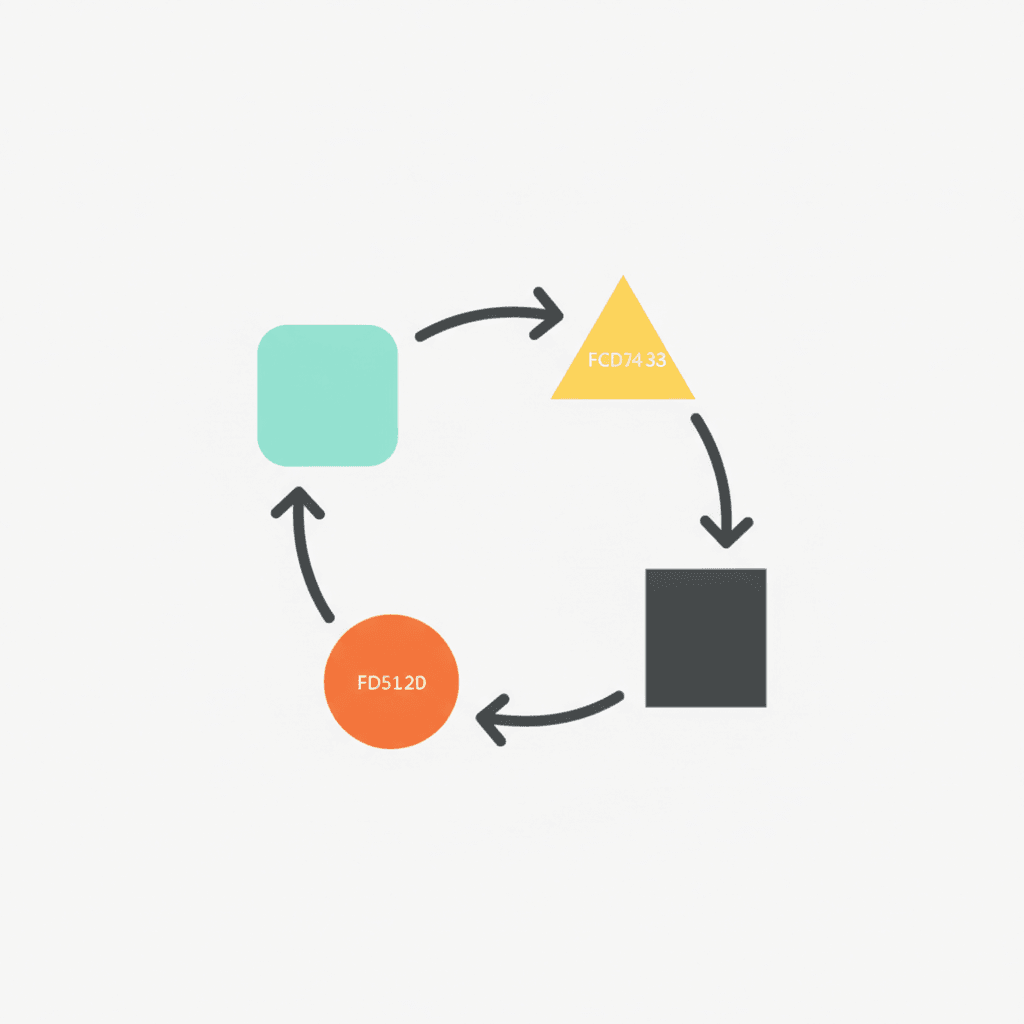
The Nerd Productivity System (NP System) is a four-phase productivity framework designed for business owners and senior professionals who want to grow their revenue without losing control of their time. It draws from ten years of applied research across GTD, Deep Work, the Seven Habits, and First Things First, and organises the best of each into 15 daily habits across four phases: Capture, Process, Plan, and Do. The goal is not to be more productive in the conventional sense — it is to work on the right things, protect the time that matters, and stop carrying your entire life in your head.
The Core Principle: You Need a System Because You’re Successful
The NP System is built on a specific observation: the more capable you become, the more demands land on your time. The conventional response — work harder, be more disciplined — runs straight into the wall of finite hours and finite energy. The real lever is not effort. It is the quality of the system that decides what your effort goes into.
Beneath the four phases sits a governing principle called the four-level hierarchy: time sits at the top (the hard limit on what is possible), then energy (how much of that time is actually useful), then attention (what you work on inside that useful time), and finally thinking (how well you work). Most productivity systems address the bottom of the stack — tools, techniques, apps — and ignore the top. The NP System works from the top down.
Phase 1: Capture — Clear Your Mental Load
Most business owners carry their entire to-do list in their heads. Every open loop — the proposal you promised, the invoice you haven’t chased, the idea you haven’t written down — stays alive in working memory, generating low-level noise that makes it harder to focus on anything properly. Overwhelm is rarely too much work — it is too many open loops, and the brain is a terrible place to store them.
The first phase has two habits: capture everything externally into a trusted system, and block the noise that should not be entering your attention in the first place. A daily brain dump into a single inbox — digital or physical — is the starting move. Once your system holds the items, your brain stops holding them for you, and the working day feels immediately different.
Phase 2: Process — Decide Once and Move On
Capturing is easy. The harder discipline is processing what you have captured. Most inboxes grow because people read an item, decide not to decide, and put it back. The NP System applies the 5 Ds of productivity to everything that lands:
- Do — under two minutes, handle it now.
- Defer — only you can do it, so assign it to a specific day.
- Delegate — someone else can handle it, so send it with context and a deadline.
- Drop — it does not need doing by anyone, so delete it.
- Diary — not actionable yet, so park it in a someday/maybe list with a review date.
There is no sixth option. The 5 Ds close every decision the first time, which is where most people lose hours every week without realising it. This phase also covers organising tasks by Area (the role they belong to) and Context (where or how you need to be to do them), so that your task list becomes something you can actually act from rather than something you dread opening.
Phase 3: Plan — Choose What Actually Matters
Having a full task list is not the same as knowing what to do first. Phase 3 covers four planning habits built around a single principle: plan from opportunities, not from problems. Most business owners plan reactively — they look at what is urgent and fight it. The NP System asks you to start from your goals and work backwards to today.
The Eisenhower Matrix filters the reactive from the strategic. Big Rocks — the most important commitments of the week — get scheduled first, before everything else fills the space. The 3-3-3 rule then structures each day: three hours on your most important deep work, three shorter tasks that must happen today, and three maintenance items. Set these the night before, protect the morning, and you have a working day with a spine rather than a reactive one.
The key shift in this phase is from the conventional to-do list — which is usually just a dump of everything — to a prioritised, time-allocated plan that reflects what you actually value.
Phase 4: Do — Protect Your Focus
The final five habits cover execution: batching similar tasks together, single-tasking inside each block, the index card method (one priority written down before anything opens), deep work and flow, and the Monk Mode Morning — protecting the first hours of the day from reactive input before the strategic work is done.
The underlying principle is that focus is a design decision, not a personality trait. If your environment, your calendar, and your habits are not structured to produce focus, discipline will not compensate. Deep work fails without a foundation — the first three phases build that foundation, and Phase 4 is where it pays off.
How Claude Fits Into the NP System
The NP System predates AI tools, but it turns out to be unusually compatible with them. Each phase produces structure — clear contexts, defined goals, prioritised tasks — and structure is exactly what an AI needs to be genuinely useful rather than generically helpful. Using Claude for productivity works best when you have already defined your areas, roles, and goals, because the AI then has the context to act on your behalf rather than waiting to be told what to do next.
The most direct application is turning Claude into a project manager using two files alongside your NP System: a context file that carries your goals and preferences, and a live task list that carries your current work. Run these together and the AI works within your system rather than alongside it.
Getting Started With the NP System
The full NP System — all four phases, all 15 habits, and the conceptual frameworks behind them — is available as a free online course. If you want to build the foundation first and layer AI on top, the free course is the right starting point. It is self-paced, and most people work through it in a few hours spread across a week.
If you are a business owner who wants to build the system and the AI layer together, with a structured programme and direct support, take the productivity quiz first to see where the biggest gaps are in your current setup. The results will tell you exactly which phase to focus on first.
Frequently Asked Questions
What is the Nerd Productivity System?
The Nerd Productivity System is a four-phase framework — Capture, Process, Plan, Do — built for business owners who want to grow their business without losing control of their time. It combines the best elements of GTD, Deep Work, and the Seven Habits into 15 daily habits, with a particular focus on clearing mental load, making fast decisions, and protecting time for strategic work.
Who is the NP System designed for?
The NP System is designed for overwhelmed business owners with £100K–£2M revenue businesses who are already working hard but feel like strategic work keeps slipping to “next week.” It also suits senior executives and team leaders who need to manage competing priorities across multiple contexts.
How long does it take to implement the NP System?
Most people build the foundation — Capture and Process — in the first week. Planning and Do habits typically bed in over weeks two and three. The free online course covers all four phases and can be worked through in a few focused hours, with each habit introduced gradually rather than all at once.
Does the NP System work with AI tools like Claude?
Yes — the NP System is designed around context, goals, and structured tasks, which is exactly what makes AI tools like Claude genuinely useful rather than just responsive. The system creates the foundation; the AI executes within it. Most users find that implementing the NP System first makes their AI tools dramatically more effective.
Is the NP System free?
The core NP System is available as a free 11-module online course at nerdproductivity.com/productivity-system/. Done-with-you implementation support — including the Claude AI layer — is available as a paid programme for business owners who want structured guidance and direct support throughout.
